


Best Balancing Exercises for Seniors


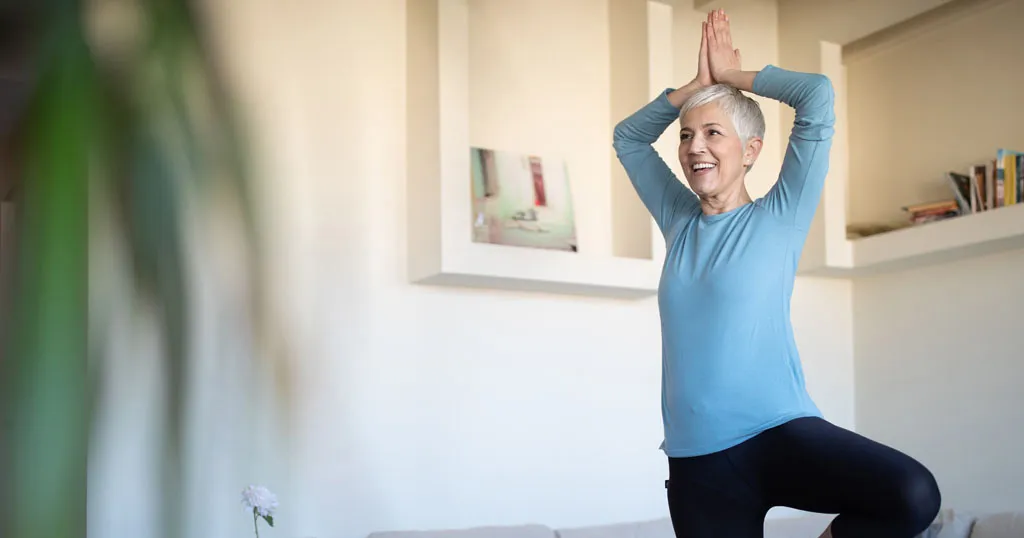
Balance exercises help improve mobility, stability, and coordination, reducing fall risk and supporting independence. The best balancing exercises for seniors are simple, low-impact movements that build strength, stability, and coordination, like walking, standing on one foot, and gentle strength training.
Key takeaways:
Balance exercises help seniors improve mobility, stability, and coordination, helping to reduce the risk of falls.
Consistency is key, regular practice strengthens core and leg muscles to support better balance over time.
Falls are a leading cause of injury for adults 65+, making balance training an important part of healthy aging.
Safety matters: use non-slip surfaces, supportive footwear, and nearby support when exercising.
Talk to a doctor if you experience new or worsening balance issues, as they may be linked to underlying health conditions.
Why balance exercises matter for older adults
Falls are common among adults 65 and older. Each year, more than one out of every four seniors fall, and about three million end up in the emergency room as a result.1 Those with chronic conditions such as osteoporosis or arthritis are at greater risk. In fact, for adults 65 and older, falls are the leading cause of injury-related deaths.2
Balance plays a role in everyday movements like walking, climbing stairs, getting out of a chair or stepping over uneven surfaces. When balance becomes less steady, these routine activities can feel harder or less secure.
How to improve balance with exercise
To help reduce the risk of falls and injuries, seniors should focus on maintaining their balance through regular exercise. Consistent balance exercises can help strengthen your core and leg muscles, improving both stability and mobility.
Before starting a new exercise routine, always talk with your doctor, especially if you’ve fallen recently, feel dizzy, use a cane or walker, or have a condition that affects your bones, joints, vision or nerves.
As Dr. Manoj Pawar, Chief Medical Officer at Mutual of Omaha, notes, “Small, steady wins are far more effective than trying to overhaul your entire lifestyle overnight.”
Top 10 balance exercises for seniors at home
1: Heel-to-toe walk
Start by standing tall, with your feet together and your arms extended.
Place the heel of one foot directly in front of the toes of the opposite foot, so they touch or nearly touch.
Slowly shift your weight and take a step forward, placing your other foot in the same heel-to-toe alignment.
Looking straight ahead (not at your feet), walk one foot in front of the other, heel-to-toe, for 10 to 20 steps.
Turn around and repeat.
If you feel unsteady, try walking with your arms at your sides, or near a wall or sturdy surface for support.
This exercise challenges the narrow walking pattern you use when moving through tight spaces, stepping around objects or recovering after a small misstep. It also helps train coordination between your feet, ankles, hips and eyes.
Make it easier: Walk beside a wall or countertop and lightly touch it as needed.
Make it harder: Pause for one second with each step before placing the next foot down.
Stop if: You feel dizzy, need to grab for support or feel like your feet are crossing too much.
2: Flamingo stance
Stand upright with your feet shoulder-width apart and your hands on your hips.
Transfer your weight onto one leg, keeping it slightly bent for stability.
Slowly lift the opposite foot off the ground, bending your knee so your foot hovers near your ankle or calf.
Hold this stance for 10 to 30 seconds.
Lower your raised foot and then repeat on the other leg.
For added challenge, try extending your arms, closing your eyes, or holding the position for a longer time.
This exercise mimics the critical single-leg weight shift required for daily actions like stepping over a curb, entering a vehicle, or pausing mid-stride to avoid a trip hazard. By reducing your base of support, it trains your stabilizing muscles to maintain upright alignment, which is a vital component of fall prevention balance exercises for seniors.
Make it easier: Stand next to something sturdy and place one hand on the surface for light support as you lift your foot.
Make it harder: Close your eyes for a few seconds or slowly move your arms in a "running" motion while maintaining your balance on one leg.
Stop if: You feel a sharp sensation in your standing hip, experience sudden dizziness, or find yourself holding your breath to stay steady.
3: Weight shifts
If you can’t quite do a flamingo stance, weight shifts are a good place to start.
Stand upright with your feet hip-width apart and relax your arms at your sides.
Slowly transfer your weight onto your right leg while keeping the left foot slightly off the ground. Maintain this position for 3 to 5 seconds.
Gradually shift your weight back to both feet.
Repeat the weight shift onto your other leg.
Perform 10 to 15 weight shifts per side.
This movement trains your body to safely transition its center of gravity from one side to the other, a fundamental skill for maintaining a steady walking gait and stepping over low obstacles. It serves as a necessary building block for more advanced fall prevention balance exercises for seniors by strengthening the stabilizing muscles around the hips and ankles.
Make it easier: Stand behind a sturdy chair or at a kitchen counter, using both hands for support as you shift your weight.
Make it harder: Increase the duration of the hold to 10 seconds or try shifting your weight while standing on a slightly soft surface, like a yoga mat, to further challenge your stability.
Stop if: You feel a "tugging" sensation in your lower back or if you feel unsteady enough that you need to widen your stance to catch your balance.
4. Chair rotations
Sit upright in a sturdy chair with feet flat on the floor.
Place your hands on your thighs or cross them over your chest.
Slowly twist your upper body to one side, keeping your hips facing forward.
Hold for 5–10 seconds.
Return to center and repeat on the other side for 8–10 reps per side.
This exercise improves spinal rotation and core control, essential for looking over your shoulder while driving or reaching across your body without losing your footing. It is a key addition to mobility exercises for seniors because it builds the torso flexibility needed to react to environmental changes without stumbling.
Make it easier: Use the chair armrests or backrests to gently guide your torso through a smaller, more comfortable range of motion.
Make it harder: Hold a light hand weight or a full water bottle against your chest to increase the resistance on your core stabilizers during the twist.
Stop if: You feel sharp, pinching pain in your back or experience a "spinning" sensation when returning to the center position.
5: Heel raises
Start by standing straight with your feet hip-width apart and your hands on a sturdy surface like a chair, table or wall. You can even use a walker; just make sure to lock the wheels.
Slowly raise your heels off the ground so that you’re standing on the balls of your feet.
Pause for 2 to 3 seconds to stretch out your calves.
Gradually lower your heels back to the ground.
Repeat 10 to 15 times or as many as you’re comfortable with.
This exercise strengthens the calves and ankles, providing the propulsion needed for a steady walking gait and the stability required when reaching for items on high shelves. It is a fundamental component of balance exercises for seniors because it improves your ability to recover quickly from a forward stumble.
Make it easier: Perform the movement while seated in a sturdy chair, focusing on the ankle range of motion before progressing to a standing position.
Make it harder: Perform the raises without holding onto a support surface or try lifting one heel at a time while balancing on a single leg.
Stop if: You feel a sharp pain in your Achilles tendon or experience significant cramping in your calf muscles.
6: Shoulder rolls standing
Stand tall with feet shoulder-width apart and arms relaxed at your sides.
Lift your shoulders up toward your ears.
Roll them back in a circular motion.
Lower them down and repeat the movement smoothly.
Perform 10–15 rolls, then reverse direction.
Standing shoulder rolls promote an upright posture and release upper-body tension, ensuring your head and neck remain aligned for better spatial awareness while moving. It is a vital addition to fall prevention balance exercises for seniors by improving the shoulder flexibility needed for natural, balanced arm swings.
Make it easier: Sit in a sturdy chair to perform the rolls if you feel unsteady while standing.
Make it harder: Carry a light hand weight in each hand to add resistance and further engage your core stabilizers during the circular motion.
Stop if: You feel a sharp pain in the shoulder joint or experience any sudden lightheadedness.
7: Side leg raises
Stand tall with one hand on a chair or wall.
Slowly lift one leg out to the side.
Keep your back straight and toes facing forward.
Hold for 2–3 seconds.
Lower and repeat 10–15 times, then switch sides.
Add weights as needed.
This move targets the outer hips to prevent the lateral swaying that often causes trips during side-to-side transitions. It is a critical part of fall prevention balance exercises for seniors because it keeps your pelvis level and stable while walking.
Make it easier: Stand with your back against a wall for extra support while performing the lift.
Make it harder: Perform the lift without holding the support surface or add a light ankle weight for resistance.
Stop if: You feel a sharp pinch in the hip joint or find yourself leaning your upper body significantly to complete the motion.
8: Marching in place
Stand upright with feet hip-width apart.
Lift one knee to hip height or as high as comfortable.
Lower and repeat with the other leg.
Continue alternating legs in a slow, controlled motion.
Perform for 20–30 seconds.
This exercise mimics the high-step motion required to safely navigate stairs, curbs, or uneven walkways. It is a vital component of fall prevention balance exercises for seniors because it improves hip flexor strength and trains your body to maintain a stable center of gravity during weight shifts.
● Make it easier: Stand near a wall or chair and use one hand for light support while lifting your knees.
● Make it harder: Lift your knees higher toward your chest and swing your opposite arm with each step to further challenge your coordination and balance.
● Stop if: You feel a sharp pinch in your hips, significant lower back pain, or find yourself leaning heavily to one side to lift your foot.
9: Sit-to-stand
Sit in a sturdy chair with feet flat on the floor.
Lean slightly forward and push through your legs.
Stand up slowly without using your hands if possible.
Pause briefly at the top.
Sit back down with control and repeat 8–12 times.
This exercise strengthens the primary muscle groups used for rising from a chair, bed, or toilet, which is essential for maintaining functional independence. It serves as a cornerstone of fall prevention balance exercises for seniors by building the leg power needed to recover your footing if you begin to slip.
Make it easier: Use the chair armrests for a light push-assist until your leg strength allows for an unassisted stand.
Make it harder: Cross your arms over your chest and slow the "sitting" phase to a count of five to maximize muscle engagement.
Stop if: You feel sharp pain in your knees or hips, or if you experience a sudden head rush upon standing.
10: Back leg raises
Stand behind a chair and hold it for support.
Slowly lift one leg straight behind you.
Keep your back straight and avoid leaning forward.
Hold for 2–3 seconds.
Lower and repeat 10–15 times, then switch legs
This move strengthens the glutes and lower back, essential for maintaining an upright posture and preventing the forward-leaning gait that increases trip risks. It is a targeted fall prevention balance exercise for seniors that improves the stability needed to step backward or stand for extended periods.
Make it easier: Lift your foot just a few inches off the floor while keeping a firm, two-handed grip on your support surface.
Make it harder: Increase the challenge by letting go of the chair or adding a five-second hold at the peak of the lift.
Stop if: You feel any sharp pain in your lower back or if you start leaning your torso forward to "cheat" the height of the lift.
Safety tips for performing balance exercises
It is important to stay safe during a balance exercise routine. Here are a few safety tips to remember:
Perform exercises on a flat, non-slippery surface in a well-lit area free of clutter.
Stay near a sturdy object like a wall, chair, or table for extra balance.
Put on shoes that support your feet and don’t slip.
Begin with simple exercises and gradually increase to harder ones as you get stronger.
Do light stretching or walking to get your muscles and joints ready.
When to seek professional help for trouble balancing
If you’re experiencing balance issues, it’s important to talk to your doctor, especially if this is a new problem for you. Balance problems can be caused by things like medications, vision or hearing difficulties, or more serious health conditions such as Parkinson’s disease, diabetes, or stroke. Your doctor can also recommend a physical therapist if you need supervised balance exercises.
Your path to balance and independence with Mutual of Omaha
Balance exercises are essential for staying healthy and active as you age. These simple exercises can greatly help lower the chances of falling and prevent serious injuries that often accompany them. Maintaining balance also promotes confidence and independence, enabling you to continue enjoying the activities you love.
Support your health at every stage
Staying active is one part of maintaining your health as you age. For Medicare-age adults, understanding health care options can also be an important part of planning ahead.
Frequently asked questions (FAQs)
Why do older people lose their balance so easily?
As you age, your muscles naturally weaken, especially in your legs and core, which are essential for maintaining balance. Joints get stiffer and less flexible, adding to balance problems. Other causes of balance problems can be:
Medications
Inner ear problems
Osteoporosis
Low blood pressure
Parkinson’s disease
Diabetes
Stroke
Heart disease
Alzheimer’s
What are the best walking shoes for seniors with balance problems?
The best walking shoes for seniors with balance issues have non-slip soles, a wide, stable base, firm heel support, and good cushioning to improve stability and reduce fall risk.
How can I improve my balance at 75?
You can improve your balance at 75 by regularly practicing simple, low-impact exercises like single-leg stands, heel-to-toe walking, and gentle strength training to build stability in your legs and core. Don’t feel defeated by big goals; as Dr. Pawar notes, “it’s about making choices that are sustainable for your individual life and needs.” Consistency with small, manageable movements is key to improving coordination and reducing fall risk at any age.
Sources:
CDC, Facts About Falls, January, 2026
CDC, Older Adult Falls Data, February, 2026

Reviewed by: Dr. Manoj Pawar
Chief Medical Officer at Mutual of Omaha
Dr. Manoj Pawar, MD, FAAFP, is a board-certified family physician and Chief Medical Officer at Mutual of Omaha. He brings over two decades of clinical and executive experience with a focus on preventive care, public health and empowering physicians and patients with the tools they need to live their best lives. Dr. Pawar completed his undergraduate degree at Northwestern University, his medical degree at McGill University in Montreal, and his specialty training at the University of Colorado. He’s a Fellow of the American Academy of Family Physicians and a member of Delta Omega, the Public Health honor society.
Suggested content for you in Health & Well-Being
-
7 Ways to Keep Your Kidneys Healthy
-
7 Low-Impact Exercises for Seniors Who Want to Stay Active
-
What Is Healthspan? How to Stay Active and Independent Longer
-
How to Prepare for Your Welcome to Medicare Visit
-
How to Keep a Personal Health File After 65
-
How to Prepare for a Medicare Annual Wellness Visit
-
How to prevent heart disease: 8 heart-healthy tips
-
Seniors Fight Loneliness with Creativity
-
How to Boost Memory: 7 Brain Health Tips
-
Fun Activities for Seniors to Stay Healthy
Explore other topics
Traveling in Retirement
Top 5 Cities for Seniors to RetireStaying Fit
5 Exercises for a Cardio Workout At HomeHealth & Aging
Fun Activities for Seniors to Stay Healthy All Categories
 Medicare
 Retirement Planning
 Business Resources
 Life Insurance
 Financial Planning
 Health & Well-Being
 Travel & Living