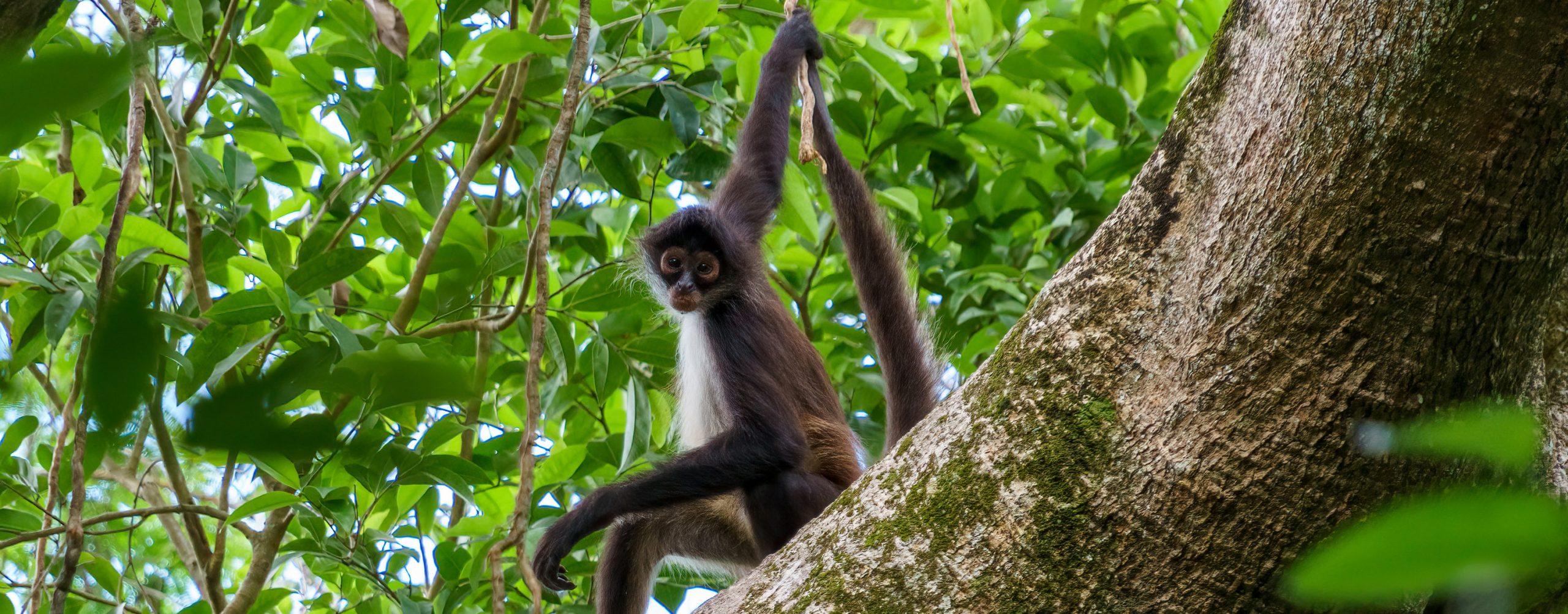
Mexican spider monkeys are endangered because they’re losing two things they can’t do without: the forest canopy they live in and, for young monkeys, the mothers they learn from. As forests are cleared, the treetop routes they use to travel and feed break apart. When traffickers capture an infant for the pet trade, the mother may be killed in the process. The young monkeys that survive and are rescued may need specialized care for years to come.
Key takeaways
- Mexican spider monkeys are an endangered species. Habitat loss and the illegal pet trade are among the biggest threats to wild populations.
- When forests are cleared or broken into patches, spider monkeys lose the connected canopy they use to travel, feed and interact.
- Capturing one infant for the illegal pet trade can cost two monkeys, since mothers may be killed in the process.
- Rescued spider monkeys can arrive malnourished, injured or stressed. Those that can’t return to the wild may find long-term homes at accredited zoos and wildlife centers.
- Choosing not to buy or keep wild primates as pets helps reduce the demand that drives trafficking.
Are Mexican spider monkeys endangered?
Yes, Mexican spider monkeys are endangered. Their range stretches from Mexico into Central America, where habitat loss and the illegal pet trade continue to threaten wild populations.
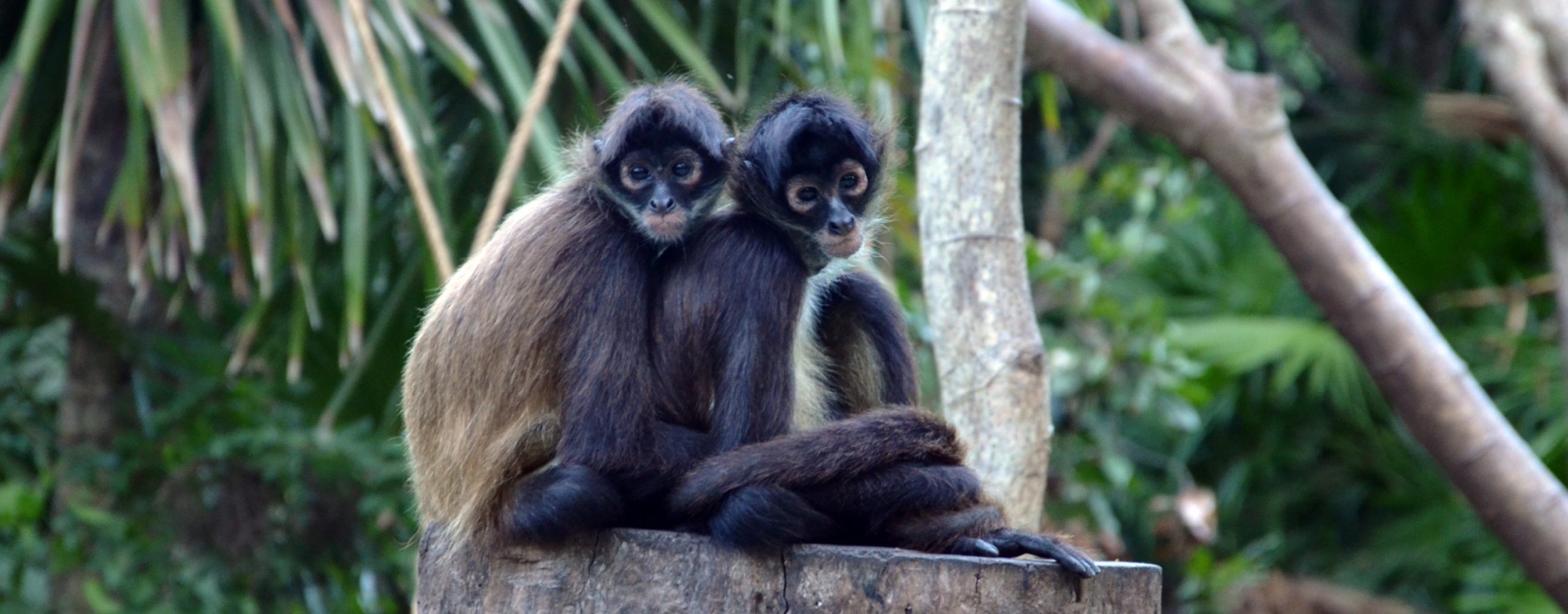
Spider monkeys are built for life in the treetops. With long arms and a grasping tail that works like a fifth limb, they rarely need to come down to the ground.
What are the biggest threats to spider monkeys?
Habitat loss and the illegal pet trade are two of the biggest threats facing Mexican spider monkeys. One shrinks the forest they live in. The other takes monkeys out of it directly.
How does deforestation affect spider monkeys?
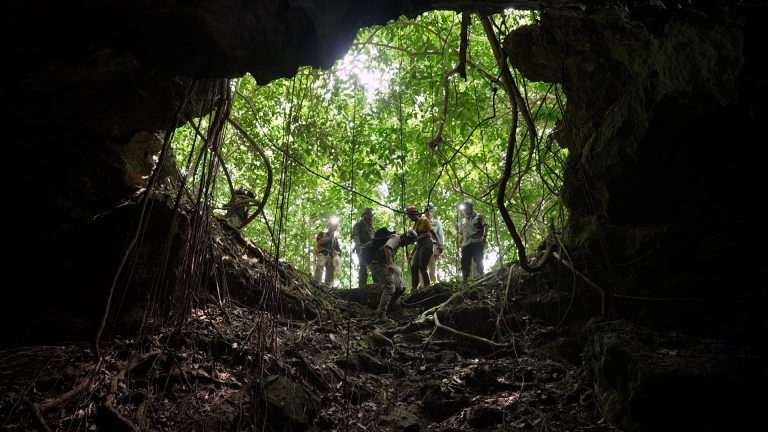
Clearing forests takes away the places where spider monkeys feed, rest and travel. Even when some forest remains, breaking it into smaller patches leaves gaps in the canopy. For an animal that rarely comes down to the ground, those gaps can cut monkeys off from food and other groups.
Other tree-dwelling primates face similar problems. In Costa Rica, wildlife bridges help howler monkeys cross gaps between trees where development has split the natural canopy.
How does the illegal pet trade affect spider monkeys?
Young spider monkeys are frequent targets of the illegal pet trade. Their small size makes them appealing to buyers and easier for traffickers to smuggle, but taking a baby from the wild can come at a much greater cost. Mothers may be killed during capture, removing both the infant and an adult female from the population.
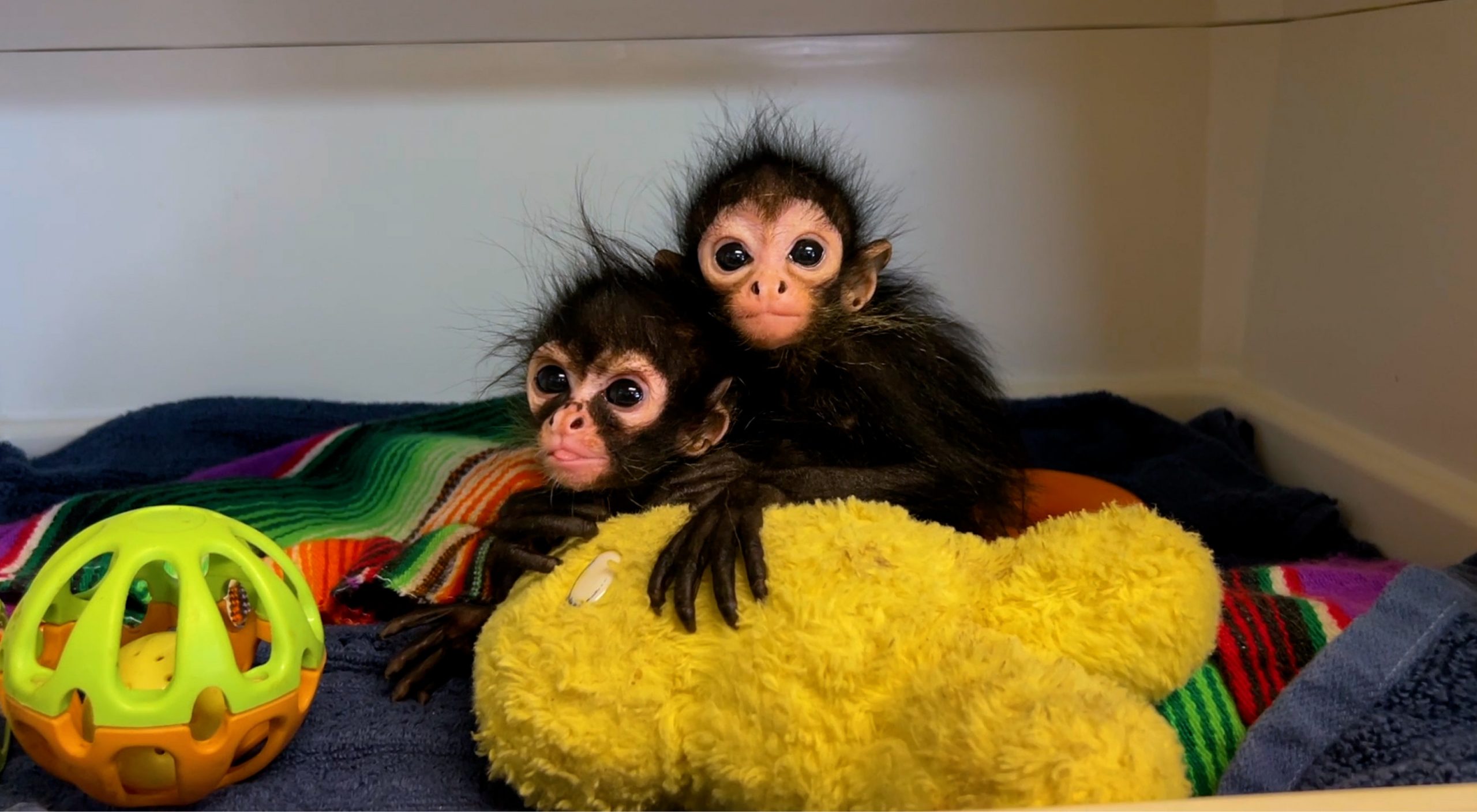
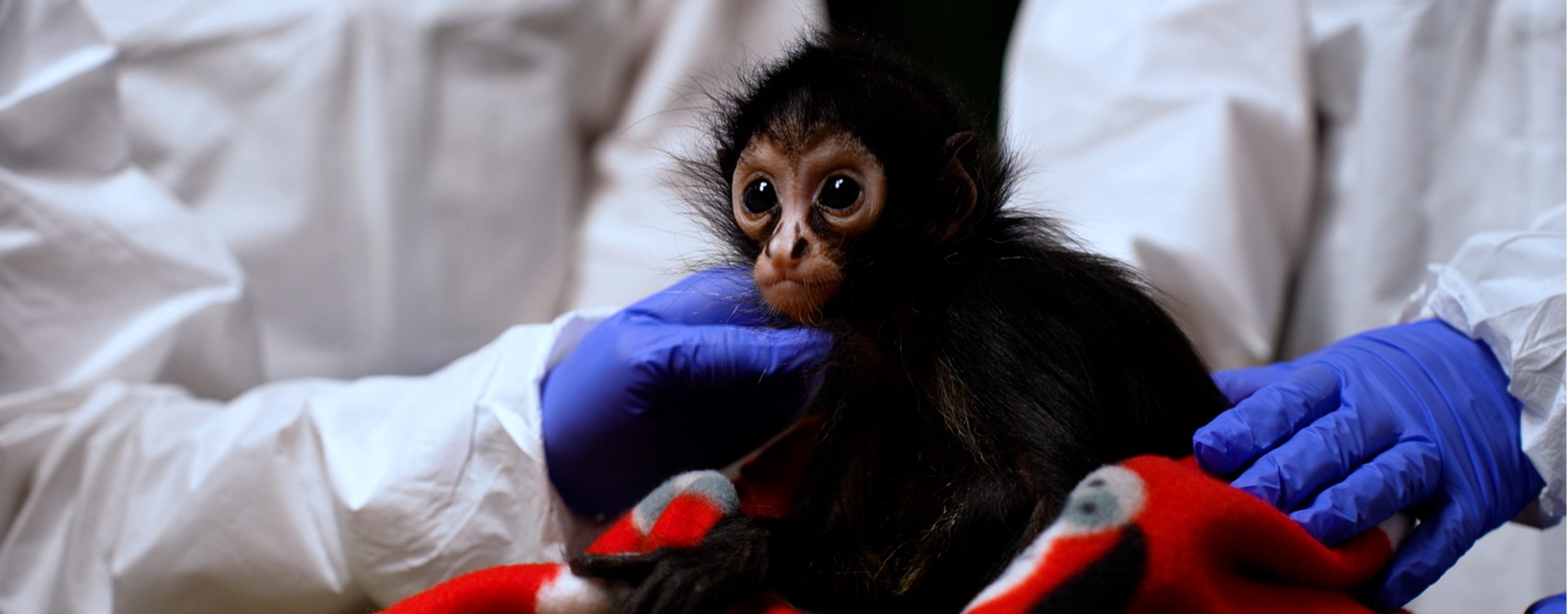
Infants that survive often arrive in poor condition. Recent confiscations have included young Mexican spider monkeys that were malnourished, dehydrated, injured or traumatized after being taken from the wild.
Even with the best intentions, few people can meet the needs of a highly social primate that can live for decades.
What happens to rescued spider monkeys?
What happens to a confiscated or surrendered spider monkey depends on its age, health and history. Many first need treatment for injuries, dehydration or poor nutrition before they can begin recovering. Young monkeys taken from their family groups may also need slow, careful introductions before they can live with other spider monkeys.
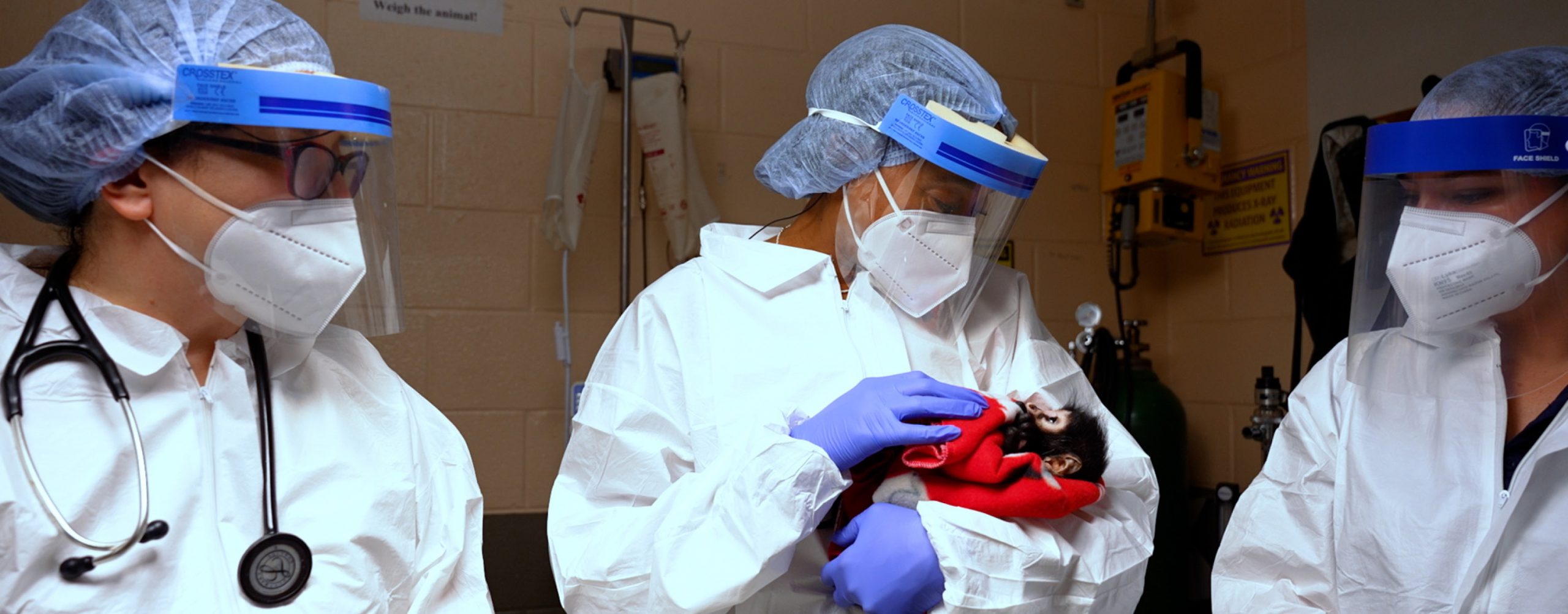
For infants smuggled into the U.S., that first round of care often happens right at the border. At Gladys Porter Zoo in Brownsville, Texas, the veterinary team treats young monkeys intercepted near the U.S.-Mexico border. The Wild Kingdom crew joined the zoo’s team as they cared for infants affected by the illegal pet trade.
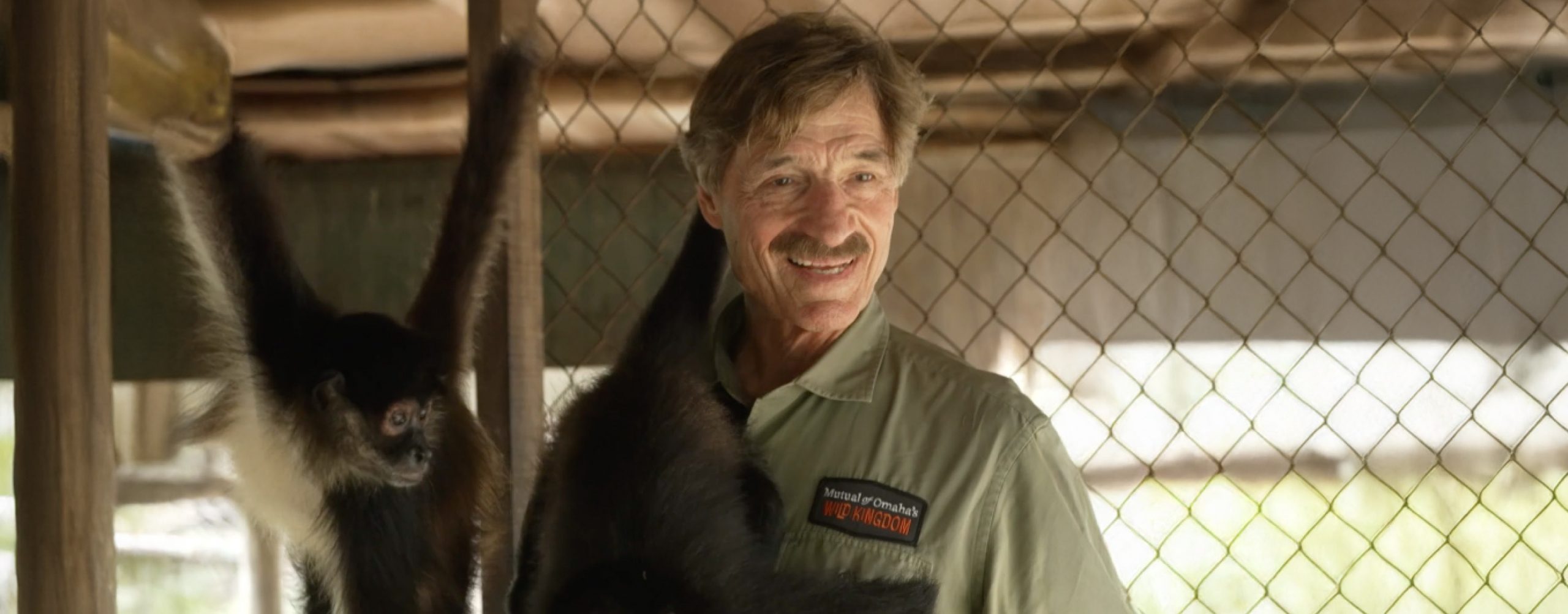
For monkeys that can’t return to the wild, a sanctuary can offer a different kind of future. At The Jungle Place in Mexico, Peter Gros, co-host of Mutual of Omaha’s Wild Kingdom Protecting the Wild, met spider monkeys that had been abandoned after living with people. There, they can live and interact with other spider monkeys — a glimpse of what long-term care can look like.
Can rescued spider monkeys return to the wild?
Often, no. Young spider monkeys stay close to their mothers for years, learning how to find food, move safely through the canopy and fit into a social group. Infants taken too early miss much of that. Some also grow used to people, which can make life in the wild even harder.
Dr. Deborah Carboni, a veterinarian at Gladys Porter Zoo, sees this with some of the trafficked infants that arrive in her team’s care:
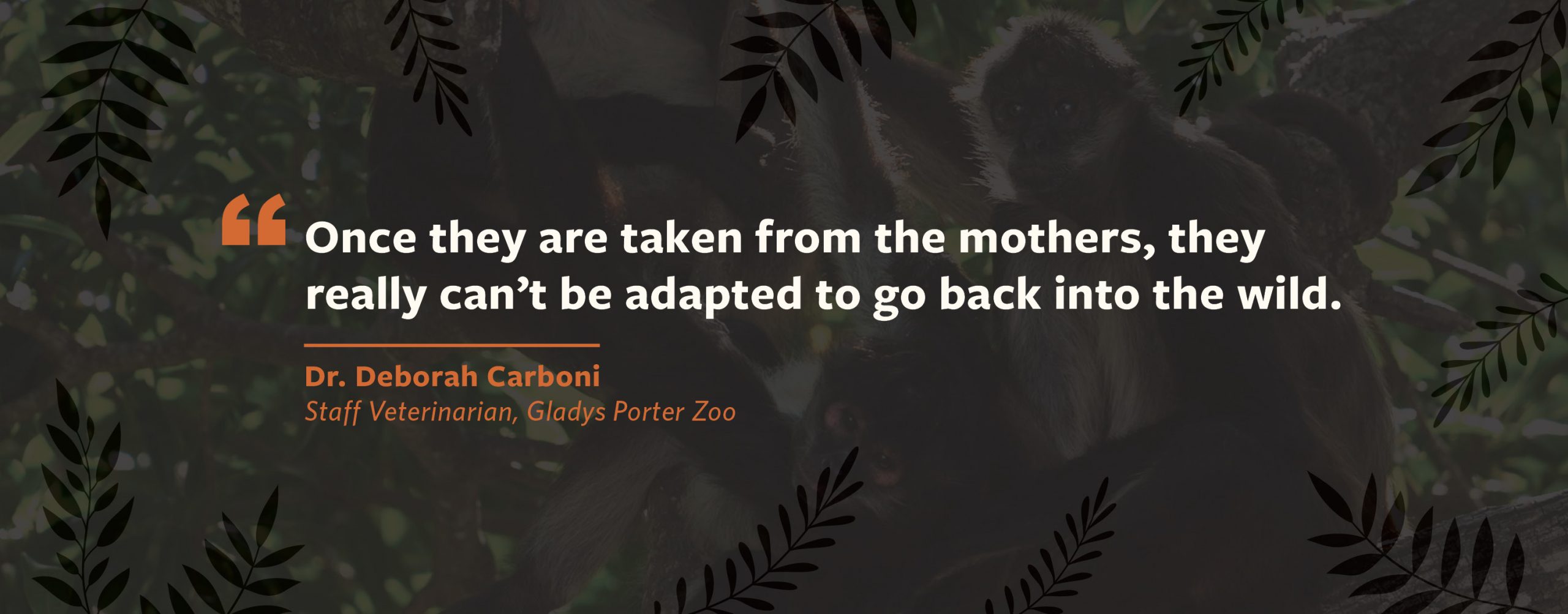
“Once they are taken from the mothers, they really can’t be adapted to go back into the wild. They come to us and they’re oftentimes in a debilitated state.”
When release isn’t possible, the focus shifts to finding an accredited zoo or wildlife center that can provide long-term care and opportunities for the monkeys to live with others of their species.
How are conservationists helping spider monkeys?
Helping spider monkeys means working on two fronts: protecting the forests they live in and keeping animals from being taken out of them. Maintaining forest habitat gives wild populations space to move, feed and raise young.
When monkeys are confiscated, rescue becomes a team effort. Wildlife authorities, veterinarians and accredited animal-care facilities work together to treat each animal and find it the right home. The Wildlife Confiscations Network places rescued animals, including spider monkeys, with facilities equipped to care for them.
You can help, too. Choosing not to buy or keep wild primates as pets helps shrink the demand that fuels trafficking.
Watch spider monkey rescues on Wild Kingdom
The work to support spider monkeys can take many forms, from protecting forests to caring for animals rescued from the illegal pet trade. See these efforts up close on Mutual of Omaha’s Wild Kingdom Protecting the Wild and follow wildlife experts working to give threatened species a better chance in the wild and in human care.
Get a behind the scenes look at the Second Chance Spider Monkeys episode.
Watch “Second Chance Spider Monkeys” on nbc.com or the NBC app.
Frequently asked questions about spider monkeys
Why are spider monkeys important to forests?
Spider monkeys help plant new trees. They eat mostly fruit, swallowing the seeds and dropping them far from the parent tree as they travel. That helps forests regrow and stay diverse, so losing spider monkeys can affect the whole forest, not just one species.
How long do spider monkeys live?
Spider monkeys can live for decades. For rescued animals that cannot return to the wild, that can mean a commitment to specialized care lasting around 50 years.
Are all spider monkeys endangered?
No. There are seven species of spider monkeys, and their conservation status varies. The Mexican spider monkey featured here is endangered, while other spider monkey species fall into different threat categories.
How many spider monkeys are left?
There’s no single worldwide count. Numbers vary by species and location, so conservationists track populations one species and region at a time.
Can spider monkeys be pets?
No. Spider monkeys are highly social wild primates that need space, a group of their own kind and specialized care that can last decades. Buying one also fuels the demand for illegal trafficking, which takes infants and sometimes their mothers out of the wild.
Sources
Nashville Zoo. “Nashville Zoo Welcomes Rescued Spider Monkeys.” April 29, 2026. Accessed July 2026. nashvillezoo.org/our-blog/posts/nashville-zoo-welcomes-rescued-spider-monkeys
Saint Louis Zoo. “Endangered Spider Monkeys Recovering from Illegal Wildlife Trade at Saint Louis Zoo.” Aug. 18, 2025. Accessed July 2026. stlzoo.org/news/spidermonkeys
Brookfield Zoo Chicago. “Endangered Spider Monkeys Rescued From Wildlife Traffickers Find a Forever Home at Brookfield Zoo Chicago.” Feb. 18, 2025. Accessed July 2026. brookfieldzoo.org/press-releases/2025-rescued-spider-monkeys